Tampilkan postingan dengan label travel photography camera. Tampilkan semua postingan

Travel Photography Tips

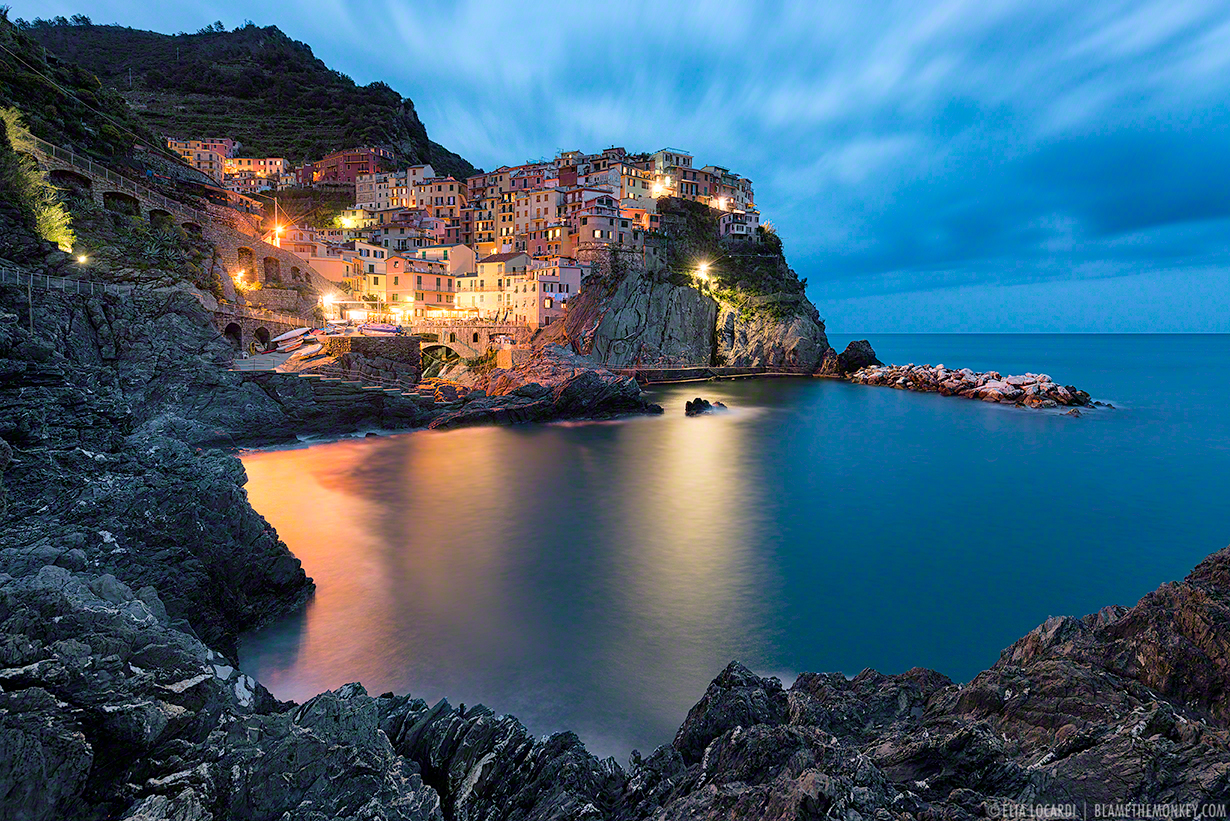
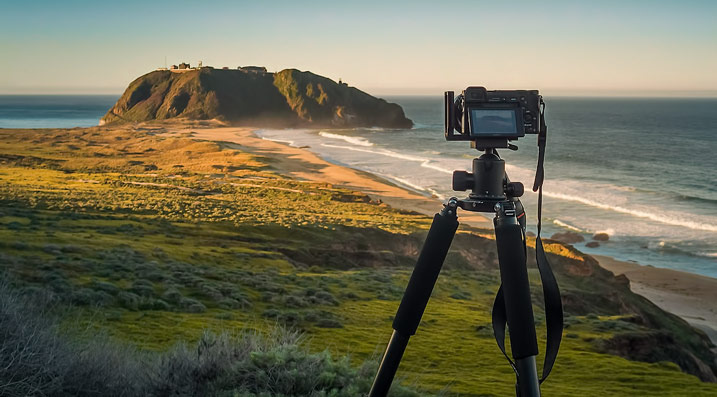
Summer time is the perfect time for snap happy people, and for anyone heading to an exotic destination for a well deserved break. Tourists all over the world capture priceless memories forever and their top-quality images are then stored away never to be seen by anyone. Travel photography is a great hobby for any holiday goer, and with a few helpful tips you can bring home some great images that you can enjoy forever. If your images are better then normal you may be able to make some cash from them. The key to travel photography is to make your images appealing to a wider audience than normal. You want to capture the mood and culture of a new place. You need to be able to sell a holiday through a photo. Tips on what to photograph: Taking landscape images in a far-off land can be tricky. The light conditions may be very different from what you are used to. Exposure may also be very tricky to calculate. If you are in doubt, bracket your shots to ensure that you will get the perfect image. Travel photographers should start their day as the sun is rising. This is the best time to capture mood in a landscape image. Night time urban landscape pictures will always make an interesting shot when exposed correctly. Use a tripod to ensure that your image is sharp. Food shots can be very memorable, try to include the waiter or anything that you normally don't see at home. The interior and the exterior of restaurants can also be photographed. Take pictures of local signs, buildings and famous landmarks. Be very careful with the position of the sun. Try taking images when the sun is to your side. This will cast long shadows along the front of the building. Use a polarising filter to cut out any glare from the glass in buildings. Photograph the people. Travel companies are always seeking interesting people images. Photograph people eating food - people working - children playing - local police, fire fighters and any other service people in the area. Make sure that they are doing something interesting. Visit local markets. This can make very interesting photography. Take plenty of images of the local stalls and the sellers. Take pictures of the different foods and anything else that you think may be unusual. Travel photography may also be an immense financial trip for the professional photographer. Photo publishers are always seeking new material and are always on the look out for new talent. When you return home with your images make a copy of each. Label each image with a brief caption. Its best to do this straight away when the holiday is fresh in your head. Any holiday goer with the ability to use their lens correctly has the potential to sell their images. All you need to know is what makes a good travel image. You don't need to be a top class photographer to profit from taking pictures of far-off places.
Travel Photography Tips Travel Photography Tips Travel Photography Tips Travel Photography Tips Travel Photography Tips Travel Photography Tips Travel Photography Tips Travel Photography Tips Travel Photography Tips Travel Photography Tips Travel Photography Tips Travel Photography Tips

Best Travel Photography

While wandering along with your digital camera, you can utilize it to assist you all the way through a range of possible harms that might happen. It's moreover significant to acquire several safety measures to guarantee your camera and associated apparatus will be protected as you journey. Journey taking pictures needs several particular ways. Wandering along with your camera can be a stressful practice for persons not associated with camera-take journey. Worries of break and stealing consider greatly on the mentality of wandering lens man. There are several methods to build your succeeding journey along with your camera additional of a pleasure and fewer of worried circumstances. Here are digital cameras wandering guidelines for creating the mainly of your camera's capacities, whereas as well defending it, throughout journey taking photographs. Evading weather troubles. The weather conditions can be undeterminable while you're journeying. There's moreover a possibility you'll be close to water or cruel warmth. If you don't have an all-weather or waterproof camera -- if you aren't sure, you probably don't comprise one -- you are able to attempt maintaining the camera affixed in a plastic container to defend it from wet. To shield it from severe freezing, maintain it draw near to your body part. If you observe compression lying on or within the camera, discontinue make use of it by the time you're going back indoor. Lock your gear/bag When journeying in an assemblage (similar to an airline), think about a little security device for your camera purse. This can aid avoiding expert stealers from "pick your pocket" as bearing the carrier on your shoulder. Furthermore fastening your equipment while leaving in a hotel area is an excellent initiative. You could make use of a laptop security device wire throughout the zipper hauls to lock the bag to a strong portion of furnishings. It is frequently secure to depart your equipment in the case of your vehicle than unsafe in an inn area or in the frontage of the automobile Backing up images. Even if you contain several memory storages through your camera, it's an excellent thought to support the information on the memory storage. Finally, those holiday photographs are not disposable must the memory storage shatter or else get misplaced. Some establishment that permits you to create photographic prints from your digital photographs must be capable to reproduce the pictures on memory storage to a information CD or DVD. Digital Battery chargers. The majority battery device chargers will operate through the 220V/50Hz electric current established in Europe. Ensure the reverse of your device charger to be confident. You'll also involve a transition plug to associate through the plugs exercised in the European state you're tripping. Insuring your equipment. Well ahead of you journey, get in touch with your assurance business as well as make certain your taking pictures apparatus is enclosed while you take a trip. Be precise regarding what gears you'll be taking and wherever you'll be traveling. Afterward take a note of serial information and representations of each and every one of the apparatus. You may require purchasing a traveler to cover up your picture making apparatus. Permanently label each piece of equipment. The majority of stealers will discard a part of apparatus once they understand it is noticeable. Write down your name (and telephone number if there is room) lying on every portion of your apparatus. You be able to make use of an undying ink indicator (photographic pens actually immerse into plastic) otherwise include a specialized merchant incise the data.
Best Travel Photography Best Travel Photography Best Travel Photography Best Travel Photography Best Travel Photography Best Travel Photography Best Travel Photography Best Travel Photography Best Travel Photography Best Travel Photography Best Travel Photography Best Travel Photography

Travel Photography

Too many people have the idea that being paid to take photographs of exotic places is the ideal job. It may take years of effort to be paid by magazines such as the National Geographic, but are there better ways to become a travel photographer. As most people have more leisure time, more holiday time, and more disposable income, the demand for travel photographs has increased dramatically. Not only are they in demand for travel brochures, but they're also used extensively in other advertising copy. Images necessary for sale and publication require rather more skill than those applied to standard holiday snaps. "The real voyage of discovery consists not in seeking new landscapes but in having new eyes." Was a quote by the French novelist Marcel Proust, and it appears to be of particular use to the travel photographer. Investigate the possibilities of becoming a contracted photographer at Lonely Planet Images. Lonely Planet Images is a digital library of travel photography. They have submission guidelines available for download at their website. They are a subsidiary of what used to known as the Lonely Planet Guide, and currently have 400 photographers on contract. You can also increase your chances of breaking into the very lucrative travel market, by entering competitions such as the Travel photographer of the Year . There closing date for submissions is September 5th 2005. A camera is merely a box, that captures light, and in a studio, it is very easy to manipulate light. The reality of location photography is that it is generally expensive; you have the expenses of air tickets, hotels and meals on top of normal expenses. At the end of the day you are at the mercy of "weather", no one wantto see their ideal location subject to rain clouds. When we talk of light in terms of travel photography we are talking about intensity, as most travel shots are taken outdoors, In general there is harsh direct sunlight and diffused soft light. Harsh light is when the sun is directional, and it is great for capturing deep contrasts between light and shadows. With this type of shot, it is difficult to judge the exposure. If you direct your exposure towards the light, that will leave your shadows without any depth or definition. Conversely if you use the correct exposure for shadow, then the light areas will be without detail, giving a vaguely sinister result to the image. Unfortunately your drawback here is film, the human eye is capable of registering contrast to a ratio of 800:1, slide film is capable of only 30:1, which is slightly improved, by going digital at a ratio of 40:1. Professional photographs have all passionate views on their favourite brand name of film in this situation, but they are all in accord that you need a slower speed films, as they record better contrast and grain. ISO/ASA rating of a hundred is about the fastest film to use. It is important that you use a good photovoltaic cell (either a separate light meter or one inbuilt into the camera). Once the light meter has registered the light, the camera is capable of indicating the aperture opening required, and the shutter speed. The speed of the film is also taken into this equation. You need to measure the darkest and the lightest areas. Your immediate decision is whether to correctly expose the dark and emphasize the shadow and leave the light areas washed out or to correctly expose the light and leave the shadows without definition. Using light correctly greatly enhances your colors, the diffused lighting just after and dawn and just before sunset is helpful here. The technical reasons for this are simple when the sun is nearest to the horizon; the light has a greater distance to travel through pollution, ozone, water vapour and dust. This means that wavelengths at the violet end of the spectrum are more scattered, than the colours at the red end. This allows the blues to absorb more colour than at the red end, so the sunlight appears more golden. To study the more technical aspect of lighting, you may like to take an online course. An inexpensive, but invaluable tool for the outdoor photographer is a polarizer, as they improve the ambient lighting. They will always emphasise the blue of the sky, whilst minimizing glare. This will allow you to capture the colors you want to make a saleable photograph. More importantly it reduces the contrast in a photograph by creating a more even tone, it restricts the very much lighter and darker tones, in the image. Mike Johnston gives an excellent technical explanation of this in his excellent online course. He has also written an excellent tutorial on color theory, which explains the use of color to improve the quality of your outdoor images. Photographers who use digital imaging will also find this article tremendously helpful in enplaning how to improve the final image with regard to colour. Research is a great tool for the travel photographer, and the Internet is a great help, but don't forget to use local knowledge, ask local taxi drivers, as well as the tourist boards for inside information on a location. City photography is also included in the aspect of travel photography and here taxi drivers' knowledge can be invaluable. You can also try and coincide a trip with local festivals. If you can oversee a vantage point you can use a zoom lens to great effect without the embarrassment of having to foist a camera into someone's face. Also local festivals give opportunities to capture a part of the local culture.
travel photography travel photography travel photography travel photography travel photography travel photography travel photography travel photography travel photography travel photography travel photography travel photography